
The UK’s new car market delivered its strongest June performance since 2019, with 213,166 registrations recorded last month, according to the Society of Motor Manufacturers and Traders (Society of Motor Manufacturers and Traders). The 11.4% year-on-year increase points to a market that is recovering in volume terms, but not without underlying structural pressures that continue to shape the transition to electrification.
Growth was consistent across all main sales channels. Private registrations rose 12.5%, fleet deliveries increased 10.5%, and business registrations climbed 17.1%. Fleets remained the dominant force in the market, accounting for 59.5% of all new car sales, reinforcing how dependent headline growth remains on corporate and leasing demand rather than individual buyers.
Electrified cars drive almost all of the growth
The June figures underline a market increasingly reliant on electrified powertrains rather than internal combustion engine growth. Battery electric vehicles (BEVs) reached a 30.0% market share, their highest monthly level so far this year. Plug-in hybrids accounted for 12.5%, while conventional hybrids took 14.0%.
Combined, electrified vehicles made up more than half of all new registrations. However, the SMMT noted that much of the BEV uplift was concentrated in the traditional end-of-quarter push from manufacturers, alongside short-term demand influences such as higher fuel costs linked to geopolitical tensions.
That raises a familiar question: whether the underlying consumer market is genuinely accelerating towards zero-emission vehicles or responding to short-term pricing and sales incentives rather than sustained demand.
ZEV Mandate pressure continues to build
Despite the headline growth, the industry body warned that current adoption rates are still not aligned with government targets under the Zero Emission Vehicle (Zero Emission Vehicle (ZEV) Mandate) mandate. The rules require a rapidly increasing share of zero-emission vehicles in manufacturer sales, but the gap between policy ambition and real-world uptake remains.
The SMMT argues that manufacturers are continuing to invest heavily in electrification, but says the market is not shifting quickly enough to meet mandated thresholds. It has again called for changes to the framework, arguing that reform is necessary to maintain investment confidence and protect UK automotive competitiveness.
There is a broader policy tension here. While government targets are designed to accelerate decarbonisation, the data suggests the burden of transition is still heavily dependent on fleet purchasing cycles and incentive-led demand rather than a fully mature retail market for electric cars.
Tesla dominates a reshaped top ten
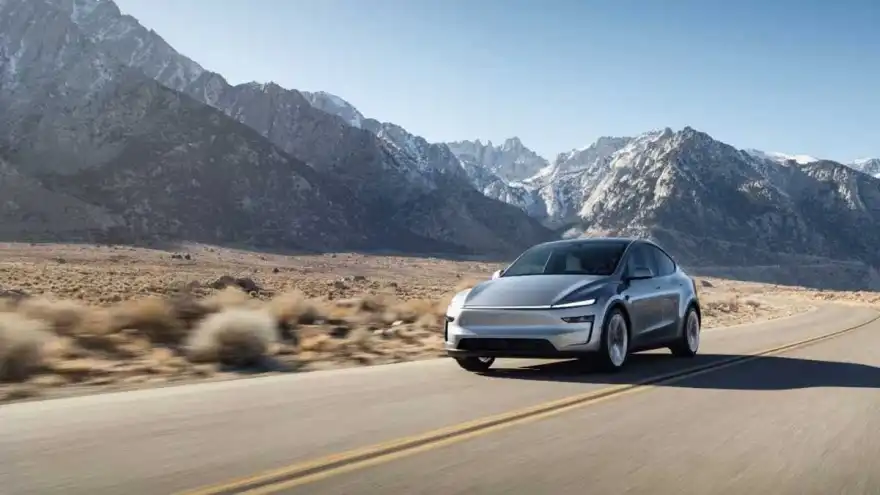
June’s best-selling models underline how quickly the competitive landscape is shifting. Tesla Model Y took first place with 6,765 registrations, followed by the Tesla Model 3 on 5,408 units.
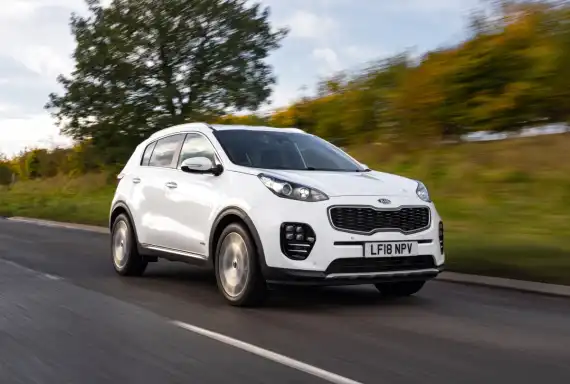
Behind Tesla, traditional volume models held their ground. The Ford Puma placed third with 5,284 registrations, narrowly ahead of the Kia Sportage on 4,554 and the Nissan Qashqai on 4,544.
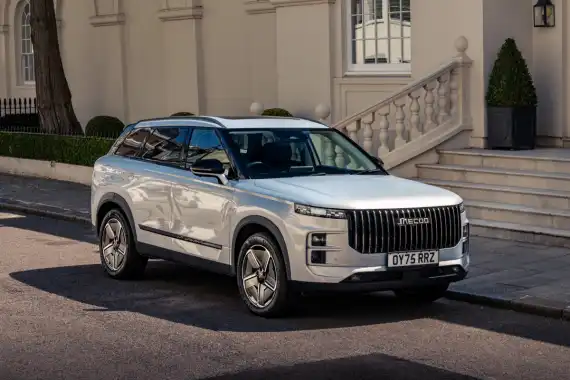
Year to date, the Ford Puma remains the UK’s best-selling new car with 29,642 registrations, ahead of the Kia Sportage on 25,828 and the Jaecoo 7 in third with 23,840. The presence of newer entrants such as Jaecoo in the top three reflects how quickly the market is fragmenting, particularly in the SUV sector.
A strong headline month, but uneven foundations
On the surface, June points to a market in solid health. Volumes are up, EVs are gaining share, and every sales channel is growing. But the detail shows a more uneven picture.
Fleet demand continues to do most of the heavy lifting, private buyer confidence remains more subdued, and electrification progress is still closely tied to pricing pressure, incentives and manufacturer push strategies rather than organic demand alone.
The UK market is moving in the direction policymakers want, but the pace remains contested. Manufacturers are investing at scale, yet the sales environment they are working within is still shaped by short-term cycles and long-term regulatory uncertainty.