Why we love it:
- Competitive sub-£30k starting price with excellent Suzuki EV grant
- Decent range and very easy to drive
- Comfortable, practical and great warranty package
Where it could be better:
- Not overly-engaging to drive
- Infotainment set-up can be unresponsive
- Boot storage space is not great
Introduction
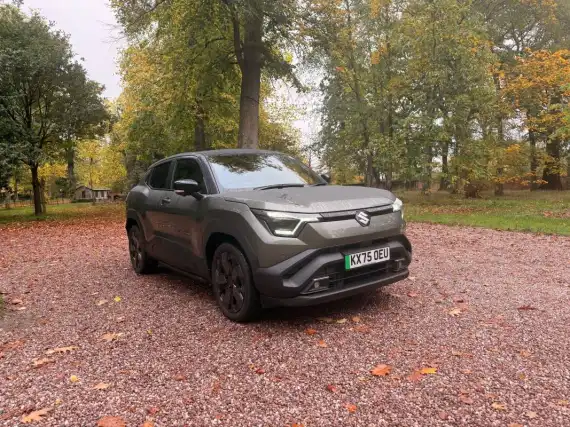
It’s been a long time coming, but finally Suzuki has launched its first ever electric vehicle. It’s called the e Vitara, so a name it’s loyal customer fanbase will be familiar with, and it has a very attractive starting price.
The e Vitara is a five-door SUV with a choice of two batteries. The smaller 49kWh unit can deliver up to 213 miles between charges. This is only available with the entry-level Motion trim. The larger 61kWh battery can be matched to either the Motion or Ultra grades and can deliver up to 264 miles. The car can also be specified with ALLGRIP-e, Suzuki’s excellent all-wheel drive system on both trim levels, with the range dropping slightly to 254.
There is quite a lot of confusion surrounding the government’s EV grant right now, so Suzuki has introduced its own cash incentive. For a limited period of time, all retail customers, including anyone purchasing via PCP finance, will receive a £3,750 discount. This means the entry-level car with the smaller battery will be priced at £26,249.
We opted for the range-topping e Vitara Ultra with the larger battery and 2WD for our test drive, but also had some fun and games in a 4WD version as we ventured off road.
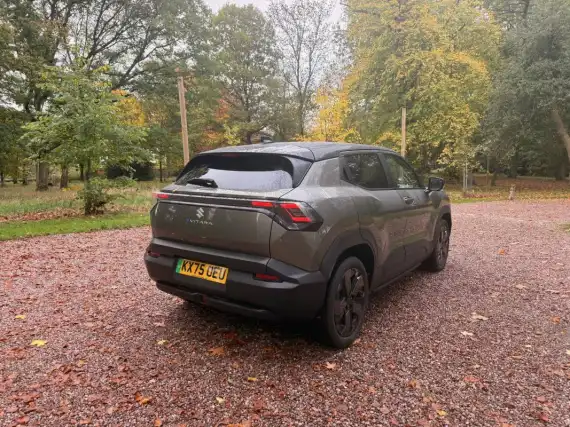
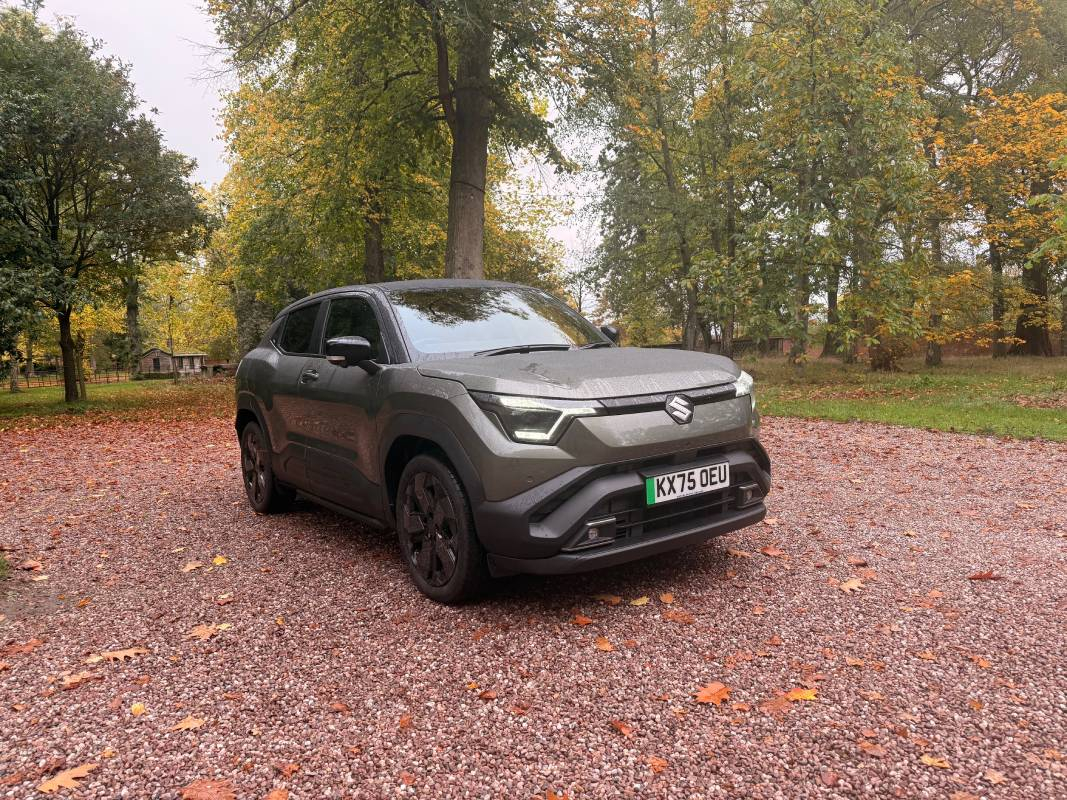
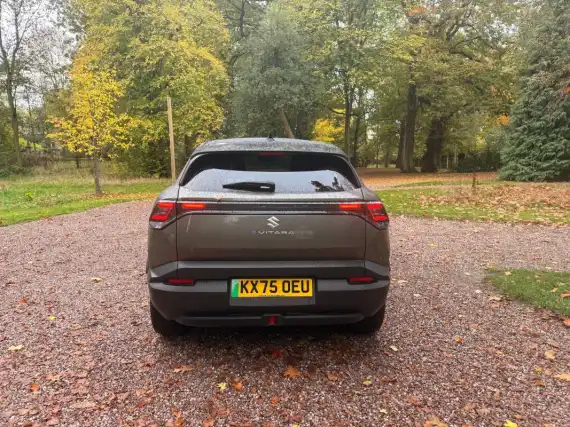
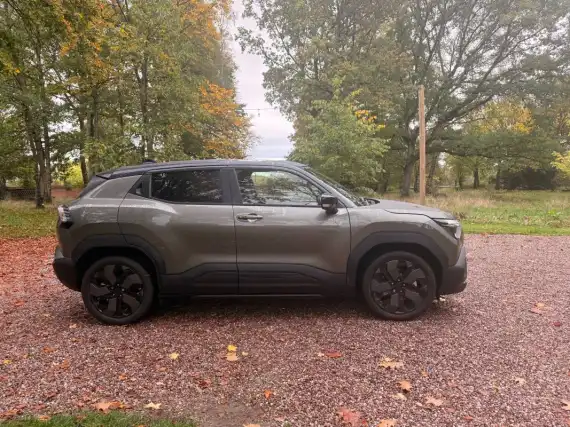
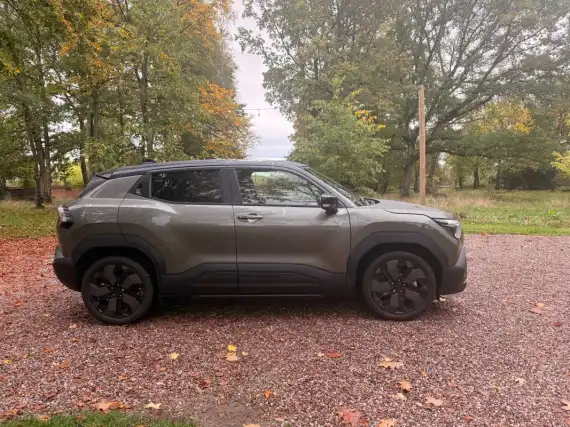
The Suzuki e Vitara is a neatly-styled five-door, five-seat SUV that is very easy on the eye. It has chunky wheel arches to accentuate its ruggedness, plus a strong grille-free front end, sculpted lines, rear door handles that are flush to the body, three-point matrix LED lights with distinctive signature daytime running lights. Ultra models benefit from an optional two-tone roof finish and incorporate a glass roof panel with retractable sunshade. Our test car featured launch Land Breeze Green Metallic paintwork and the look was completed by snazzy 19-inch alloy wheels (18-inch alloys on the Motion trim).
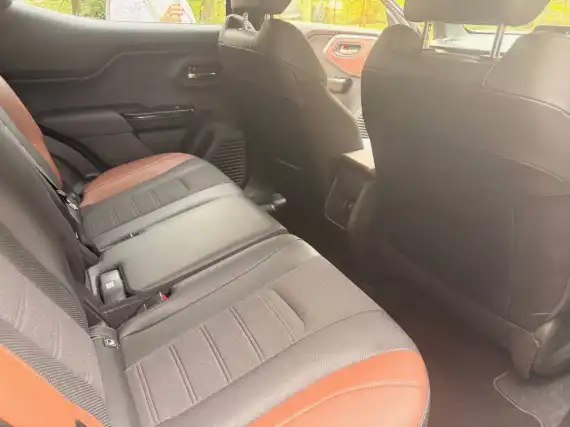
Moving inside, our model featured a two-tone tan and black interior with a mix of cloth and synthetic leather upholstery. The 10-way powered driver’s seat (manual passenger’s side) make it simple to find a comfortable driving position and these seats can be heated for added coziness.
There is a new look to the infotainment set-up with two displays built into a single unit. Behind the D-shaped steering wheel, which can be heated, is a 10.25-inch display featuring sharp graphics. This is where vital information about the driving range, battery charge levels and speed can be viewed.
The left 10.1-inch screen is the access point to the many on-board features, which are plentiful and all included in the asking price with no unexpected options bumping up the cost. Expect to find wireless smartphone connectivity via Apple CarPlay and Android Auto, a rearview camera, ambient lighting, Bluetooth, DAB radio, a pitch perfect Infinity sound system, the safety assist systems and much more besides. While the screen generally worked well, it did seem a tad unresponsive on a couple of occasions.
But we did like the physical controls to adjust the climate settings, parking brake, gear selector and drive modes.
On The Road
Handling & Performance
Our front-wheel drive Suzuki e Vitara Ultra featured the larger 61kWh battery with a range of up 264 miles on a single charge. With 174hp and 193Nm of torque, the car can complete the 0-62mph dash in 8.7 seconds and has a top speed of 93mph. Yes, there are faster EVs out there, but the e Vitara coped well on a test route that incorporated dual carriageways, country lanes and built-up town centre traffic.
Engineers have designed the e Vitara with comfort in mind rather than blistering pace, but it still offers ample zip to overtake slower-moving vehicles. It’s nicely balanced through the winding country lanes with impressive steering feel, and it can sit effortlessly at 70mph on dual carriageways where the adaptive cruise control works well.
Body roll is kept to a minimum and the suspension is on the softer side which results in added comfort for occupants.
There are drive modes called Normal, Sport and Eco that alter the dynamics of the vehicle, along with a Snow setting for added grip when needed.
Suzuki is very proud of its ALLGRIP 4WD system that celebrated its 55th year in 2025. The e-Vitara AWD versions gain a rear e-Axle with a 65hp electric motor and 114Nm of additional torque.
There are two more drive modes on this car too called Auto and Trail. The Auto mode automatically controls the front and rear torque according to road conditions, while in Trail mode, braking force is applied to wheels that have lost traction for extra all-round grip. This car also has Hill Descent Control as standard to aid with slippery downhill slopes.
We had the opportunity to take the e Vitara ALLGRIP-e model on an off-road course that involved boggy ascents and descents, slippery slalom obstacle runs and rutted tracks, and it took everything we threw at it in its stride. It skipped across deep ruts and the climbs, where all we could see were sky, were completed without any issues, despite torrential rain before we set off. Quite the all-rounder.
Space & Practicality
The e Vitara is a spacious five-door SUV that stretches 4,275mm in length, is 1,800mm wide, 1,635mm tall and has a wheelbase of 2,700mm.
Up front, two six-footers can fit comfortably side by side and the slightly elevated seating results in great all-round driver visibility.
Suzuki designers have made clever use of the available cabin space with rear seats that offer a 60:40 slide function so there is extra legroom or boot space as required. With these rear seats pushed right back, there is room for a couple of adults to sit comfortably in the rear, or three youngsters.
With the rear seats pushed forward, the boot can accommodate 310 litres of luggage, or 244 litres with the seats set right back. This capacity is increased to 562 litres with the rear seats folded flat in a 40:20:40 configuration. There is also some underfloor storage which is ideal to keep charging cables tucked away.
Additionally, there are numerous handy compartments scattered throughout the car to store bits and pieces, including a glovebox, door bins, front and rear cup holders, a large storage area beneath the floating centre console, a single seat back pocket, central cubby and a wireless charging pad.
The ALLGRIP-e will result in impressive go-anywhere, off-road ability and the e Vitara can tow a trailer weighing up to 750kg.
When it comes to charging, the 49kWh battery can be boosted from 10 to 100 per cent in six hours, 30 mins via a 7kW home wallbox or from 10 to 80 per cent using rapid charging. The larger 61kWh unit takes nine hours from a 7kW charger and is also 45 minutes if using a fast charger.
While the e Vitara comes with a standard three-year warranty, it can be extended to 10 years or 100,000 miles provided the vehicle is serviced at a Suzuki-recognised garage. We should also mention the Blade battery, renowned for its exceptional toughness and reliability.
Ownership
Running Costs
With all the confusion surrounding the latest government-led EV grant with consumers left guessing which models will be viable, Suzuki has come up with the perfect solution. It offers a grant of £3,750 across the entire e Vitara line-up. This generous discount is time-sensitive and will be applied to all retail sales, including PCP contracts, up until December 31. While it has not been confirmed, it’s likely the scheme will be extended into the new year too.
And that makes the e Vitara great value for money with the entry-level Motion model, featuring the smaller 49kWh battery and with 2WD, costing £29,999, reduced to £26,249 with the Suzuki grant.
Looking further up the line-up the Motion 2WD with the 61kWh battery is £32,999 or £34,999 with 4WD, while the Ultra, which is only sold with the larger capacity battery, is £35,799 with 2WD, as tested, and £37,799 with 4WD. These prices are before the Suzuki grant has been deducted.
It has been well documented that many government-led EV incentives have been withdrawn or reduced this year. For example owners now have to pay road tax, albeit just £10 for the first year and then increasing to the standard fee of £195 after 12 months.
All e Vitara models fall well below the £40k threshold for the Expensive Car Supplement so that won’t apply, but there will be changes to the Congestion Charge rules for EV drivers. It is free for now, but that will alter from Christmas Day.
Anyone considering the Suzuki e Vitara as a business car will receive an attractive Benefit in Kind tax rating of just three per cent which will help keep the costs down.
Additionally, customers signing up before 2026 will receive a free Ohme home wallbox.
Verdict
The e Vitara is a vitally important car for Suzuki as it takes the excellent reputation of the ICE model to a new level. Brand loyalty is a key factor for the company with seven out of ten existing owners repurchasing another car from the company line-up. With that in mind, there has been extensive work to prepare dealerships up and down the country, so they can assist with any concerns, and myth-busting any fears would-be buyers may have.
With neat styling, a generously-equipped cabin, genuine off-road ability, impressive range and an attractive asking price with some excellent financial incentives, the e Vitara should do well amongst Suzuki’s loyal fanbase looking to make the transition to an electric vehicle.
There will be comparisons to the Toyota Urban Cruiser, which is the e Vitara’s sibling model and comes to market in a few month’s time. The two companies have worked together previously with Toyota supplying the basis for the Suzuki Across and Swace. But on this occasion, it was Suzuki that took the lead and supplied the technology to Toyota.
And there will also be stiff opposition from the raft of bargain basement models arriving from China meaning Suzuki will have its work cut out to get noticed in the crowd.